
When unmarried couples decide to build a life together, sharing money often begins with small decisions. One person pays the electric bill, the other buys groceries, and both contribute toward rent. Over time, these arrangements may expand to include joint savings, a car, or even a house.
The challenge is that sharing expenses does not automatically create the same legal rights and responsibilities that marriage may establish. In the United States, the treatment of unmarried partners varies by state, the nature of the property, the contracts they sign, and other circumstances.
Couples can manage shared finances successfully, but they should understand the difference between sharing costs and creating joint financial ownership.
1. Sharing Expenses Does Not Automatically Mean Sharing Ownership
One of the most important financial distinctions for unmarried couples is the difference between contributing to an expense and acquiring an ownership interest.
Suppose one partner purchases a $3,000 sofa using an individual credit card. The other partner later contributes $1,000 toward household costs.
That contribution does not automatically establish that both people own the sofa equally. Ownership may depend on their agreement, the circumstances of the purchase, and applicable law.
The same issue can arise with vehicles, furniture, electronics, and other expensive household items.
Before making a substantial purchase together, discuss who will own it, how the cost will be divided, and what will happen if the relationship ends.
Keep receipts and records of contributions. For particularly valuable purchases, a written agreement can help document the partners’ intentions.
2. Joint Bank Accounts Require Clear Rules
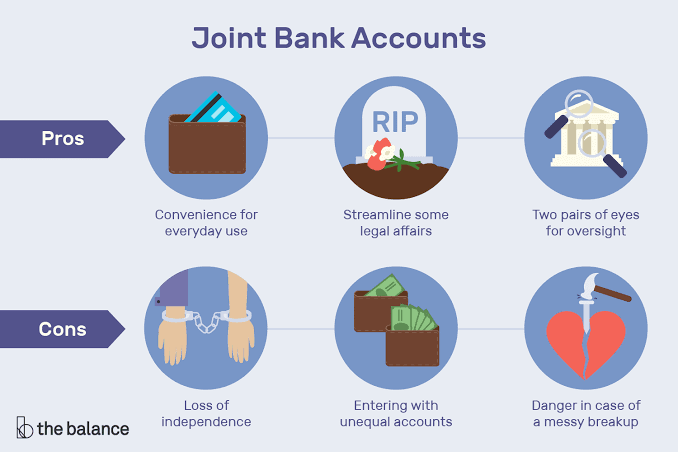
A joint bank account can make shared expenses easier to manage. Both partners can deposit money and use the account to pay rent, utilities, groceries, or other agreed costs.
However, joint access creates potential financial risks.
Depending on the account agreement and applicable law, either account holder may be able to withdraw funds without the other person’s permission. If a relationship ends suddenly, the remaining balance may become a source of disagreement.
Before opening a joint account, discuss:
- How much each partner will contribute.
- Which expenses can be paid from the account.
- Whether either person can make large withdrawals independently.
- How the remaining balance will be handled if the relationship ends.
- How automatic payments and outstanding bills will be managed.
Couples should also maintain personal accounts for individual funds. Keeping some money separate can provide practical flexibility if shared arrangements need to change.
For substantial balances or complicated ownership questions, consider legal advice before combining funds.
3. Joint Savings Need a Specific Purpose
Saving together can help unmarried couples reach financial goals faster.
They might establish a shared fund for a vacation, an emergency, a rental deposit, furniture, or a future home purchase.
However, simply labeling an account “our savings” may not answer every question about ownership.
Imagine that one partner contributes $8,000 and the other contributes $4,000 toward a shared savings goal. If they separate before using the money, they may disagree about whether the balance should be returned according to contributions or divided equally.
The outcome may depend on the account arrangement, their agreement, the purpose of the funds, and applicable law.
A practical solution is to establish written rules before making substantial deposits.
Specify the purpose of the account, how contributions are calculated, what expenses may be paid from it, and how remaining funds will be distributed if the goal is canceled or the relationship ends.
For short-term goals, a shared account may be convenient. For a major purchase or a large savings balance, a more detailed written agreement may be appropriate.
4. Buying a Home Together Requires More Than a Shared Mortgage Payment
Purchasing property is one of the most significant financial decisions an unmarried couple can make.
The partners need to decide how the down payment, mortgage payments, property taxes, insurance, maintenance, and major repairs will be funded.
They must also consider how the property will be titled.
For example, one partner might contribute $60,000 toward the down payment while the other contributes $20,000. They may agree to split monthly mortgage payments equally, but that does not automatically establish how ownership shares should be determined.
Property title, the purchase documents, written agreements, and state law can affect their rights.
Before purchasing a home, discuss the following questions:
Who owns what percentage of the property? Do not assume that the person contributing more cash automatically receives a larger legal ownership share.
How will ongoing costs be divided? Decide whether mortgage payments and maintenance costs will be equal or proportional to income.
What happens if one partner cannot pay? Establish how temporary financial difficulties will be handled.
What happens if the relationship ends? Consider whether one partner can buy out the other, whether the property must be sold, and how sale proceeds or losses will be allocated.
An attorney experienced in real estate and cohabitation matters can help prepare an agreement that reflects the couple’s intentions.
5. Understand the Difference Between Joint Accounts and Joint Debt
A joint bank account and a joint loan are not the same thing.
A bank account concerns access to deposited funds. A loan or credit agreement establishes contractual obligations to a lender.
If unmarried partners jointly sign a loan, both may remain responsible under the loan agreement even if one person promises to make all the payments.
For example, a couple might co-sign a car loan. If they break up and one partner keeps the vehicle but stops making payments, the other partner could still face consequences under the loan terms.
The same principle may apply to jointly signed leases or other contracts.
Before taking on joint debt, understand who is legally responsible, what happens after missed payments, and whether the lender offers a process for releasing one person from the obligation.
A private agreement between partners does not necessarily release either person from liability to a creditor.
6. What Happens to Shared Finances After a Breakup?
The end of a relationship can turn routine financial tasks into difficult negotiations.
Couples may need to close or reorganize joint accounts, redirect automatic payments, divide shared savings, resolve household purchases, and determine who will remain responsible for existing contracts.
A practical separation checklist includes the following steps:
- Identify every jointly held account and shared financial obligation.
- Review account statements and document contributions.
- Make a plan for upcoming rent, utilities, and other essential bills.
- Contact financial institutions to understand their account-closing or ownership-change procedures.
- Review leases, loans, and property documents before assuming obligations have ended.
- Obtain legal advice if there is a dispute over substantial assets, debts, or ownership.
Do not assume that closing a joint account automatically ends responsibility for a loan, lease, or other contract.
If the couple jointly owns a home, selling the property or transferring ownership may require a formal legal process. If they have significant joint savings, an agreed distribution or legal resolution may be necessary.
Keeping good records from the beginning can make these decisions easier.
7. Do Unmarried Partners Have Automatic Legal Rights?
Not necessarily.
Unmarried partners generally do not receive all the legal rights that spouses may have simply because they live together. The precise rules depend on state law and the facts of the relationship.
Some states recognize certain common-law marriages when specific legal requirements are met. Simply living together for a long period does not automatically create a common-law marriage in every state.
Unmarried partners may also face different rules regarding inheritance, medical decision-making, property claims, and financial support.
Couples should not assume that naming a partner as a joint bank-account holder gives that person every right associated with marriage.
Depending on their circumstances, they may wish to review beneficiary designations, wills, powers of attorney, healthcare directives, and cohabitation agreements.
Because these documents have different legal functions, professional advice may be useful when substantial assets or long-term commitments are involved.
8. A Practical Financial Structure for Unmarried Partners
For many couples, a hybrid arrangement offers a straightforward starting point.
Each partner maintains individual checking and savings accounts. Both contribute an agreed amount to a joint account used for household expenses.
Shared savings can be held separately from the household checking account, especially when the goal involves a substantial purchase.
The couple documents major shared purchases and reviews their contribution formula when income or expenses change.
This system offers several advantages:
- Individual funds remain easier to identify.
- Shared bills can be paid from one place.
- Contributions can be adjusted to reflect income differences.
- Major purchases can be documented separately.
- The amount of money directly exposed to joint-account access can be limited.
The arrangement is not risk-free, but it makes financial responsibilities easier to track.
Conclusion
Sharing finances while unmarried requires more than deciding who pays the bills. Couples should distinguish between shared expenses, joint savings, jointly owned assets, and jointly signed debts.
Joint accounts can simplify daily life, but they require clear rules. Shared savings need an agreed purpose and distribution plan. Homeownership and joint borrowing require particular care because financial and legal obligations may continue after a breakup.
The best approach is to discuss ownership and responsibilities before money changes hands. Maintain individual financial security, keep accurate records, and seek qualified legal advice when significant assets or contracts are involved.
A well-designed financial system allows unmarried partners to build a shared life while understanding their rights, responsibilities, and options if circumstances change.