
Money can reveal differences between partners that remain invisible during the early stages of a relationship. One person may prefer saving every month, while the other enjoys spending on experiences. One may want complete financial transparency, while the other considers personal spending private.
These differences become especially important when couples decide whether to combine bank accounts.
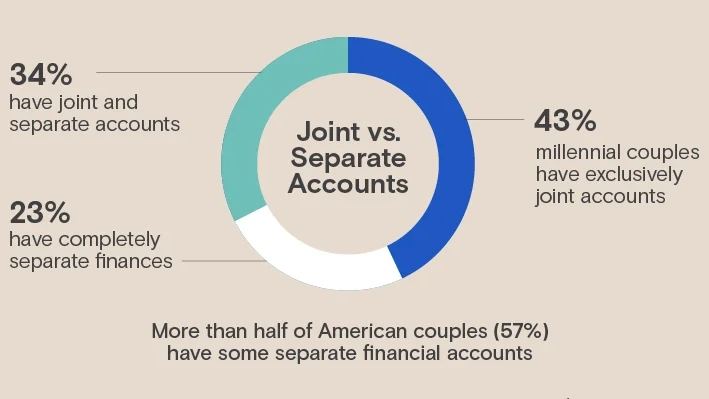
Joint, separate, and hybrid accounts each create a different balance between trust, privacy, and fairness. Choosing the right structure requires understanding not only how money moves but also how each partner experiences financial independence.
1. Joint Accounts: Does Sharing Money Build Trust?
Joint accounts are often associated with commitment because both partners contribute to a common financial pool. Household expenses, savings, and discretionary spending may all come from the same account.
For some couples, this creates a strong sense of teamwork.
Why joint accounts can strengthen trust
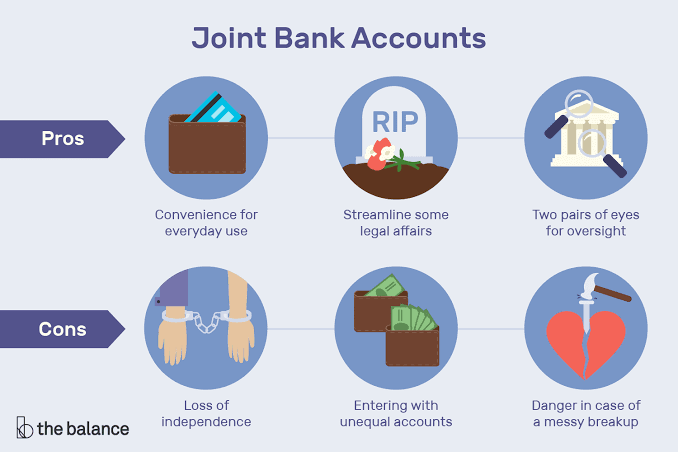
When both partners can review transactions and account balances, financial information is easier to share. They can see whether the household is meeting its savings goals, identify unnecessary expenses, and make adjustments together.
Joint accounts may also reduce suspicion caused by unclear household contributions. Instead of wondering who paid the electric bill or whether the rent transfer was completed, both partners can review the same account.
This arrangement can be particularly useful when one person earns most of the household income and the other provides unpaid childcare or domestic work.
Shared access can reinforce the principle that household resources support both partners, rather than belonging exclusively to the person receiving a paycheck.
When joint accounts create tension
Transparency can become intrusive if every purchase leads to criticism.
A partner who buys an inexpensive hobby item may feel unfairly questioned, even when the household budget is healthy. Someone who earns less may feel guilty about spending shared money, while the higher earner may feel responsible for monitoring all expenses.
Joint accounts can also make financial conflict more consequential. If one partner withdraws money impulsively or fails to respect agreed spending limits, the other may face immediate cash-flow problems.
The solution is not simply to demand more trust. Couples need clear spending rules, appropriate personal freedom, and a shared understanding of how decisions are made.
A joint account works best when transparency supports cooperation rather than surveillance.
2. Separate Accounts: Can Independence Coexist With Commitment?
Separate accounts allow partners to retain control over their individual income and spending. Shared expenses are handled through agreed contributions or assigned bill payments.
This structure can support trust in a different way: each partner respects the other’s independence.
The psychological benefit of financial autonomy
People may feel more secure when they know they can manage their own money. Separate accounts can make it easier to maintain personal savings, pursue individual interests, and preserve established financial habits.
This can be particularly important for people entering a new relationship after a divorce or financial difficulty. They may want to build trust gradually instead of immediately merging their financial lives.
Separate accounts can also reduce conflict between partners with different spending styles. One person can save aggressively while the other spends within an agreed personal budget, provided both meet their shared obligations.
The risk of financial distance
Independence becomes problematic when it prevents partners from understanding their collective financial position.
Suppose one person earns significantly less but is expected to split every bill equally. The arrangement may leave the lower-earning partner with little money for savings or emergencies.
Another problem occurs when partners avoid discussing debt or income because they believe separate accounts make financial disclosure unnecessary.
That approach can undermine shared decisions. A major credit-card balance, for example, may affect a couple’s ability to qualify for a mortgage or manage future expenses.
Separate accounts do not require complete disclosure of every purchase, but partners should communicate about financial facts that materially affect their shared commitments.
3. Hybrid Accounts: Trust Through Clear Boundaries
Hybrid accounts combine a shared account for household responsibilities with individual accounts for personal spending.
The arrangement establishes two financial zones: a shared area where both partners coordinate, and a personal area where each partner retains independence.
For example, a couple may use a joint account for rent, groceries, utilities, and agreed savings. Each person keeps a personal checking account for entertainment, hobbies, gifts, and other individual expenses.
This division can reduce disagreements because both partners know which decisions require discussion.
However, boundaries must be explicit. Couples should decide whether dining out is a shared expense, whether gifts come from personal funds, and how unexpected household purchases will be funded.
They should also establish how much each partner contributes and whether those contributions will change when income changes.
A hybrid system is not automatically fair simply because it combines two account types. Fairness still depends on the contribution formula and the way household responsibilities are distributed.
4. Fairness Is About More Than Income
Many couples assume that financial fairness means contributing equal dollar amounts. In reality, fairness can involve income, debt, caregiving, employment stability, and the value each partner brings to the household.
Consider a couple with monthly take-home incomes of $5,000 and $3,000. Their shared expenses total $2,400.
An equal split requires each partner to contribute $1,200. The higher earner contributes 24% of income, while the lower earner contributes 40%.
A proportional split would allocate 62.5% of the shared expenses to the higher earner and 37.5% to the lower earner. Their contributions would be $1,500 and $900, respectively. Each would contribute 30% of their take-home income.
Neither approach is inherently fairer in every situation. The couple should also consider individual debt payments, family support obligations, and whether one person performs substantially more unpaid work.
The most useful question is whether the arrangement leaves both partners able to meet their responsibilities and maintain reasonable financial security.
5. Spending Freedom Needs Boundaries
Financial freedom does not mean ignoring shared responsibilities.
A couple can agree that each partner may spend personal money without approval while requiring discussion for major purchases from shared funds.
For example, they might establish a $300 discussion threshold for unplanned shared purchases. They may also agree to maintain a minimum balance in the joint account before increasing discretionary spending.
These rules can reduce conflict without restricting ordinary personal choices.
The amount should reflect the couple’s income and budget. A $300 purchase may be significant for one household but relatively minor for another.
Couples should distinguish between discussing a purchase and asking permission. Shared money requires shared decision-making, but personal money can generally remain under individual control within the agreed financial plan.
6. Financial Red Flags That an Account Structure Cannot Fix
No account arrangement can compensate for dishonesty or coercive financial behavior.
Warning signs include hiding major debt that affects shared obligations, repeatedly withdrawing shared funds against an agreement, preventing a partner from accessing money for basic needs, or using income differences to control household decisions.
A joint account can increase exposure to unauthorized or unexpected withdrawals, depending on account terms and applicable law. Separate accounts may offer more independence but will not necessarily protect someone from obligations associated with jointly signed loans, leases, or other contracts.
Couples experiencing serious financial conflict should first establish access to essential funds and clarify their obligations. Depending on the circumstances, a qualified financial counselor, attorney, or domestic abuse support organization may provide appropriate assistance.
The account structure should protect both partners’ practical ability to make informed financial decisions.
7. How to Discuss Money Without Turning It Into a Relationship Test
Instead of asking, “If you trust me, why won’t you combine accounts?” try discussing the specific concern.
Questions that can help include:
- What financial information should we always share?
- Which expenses should be paid jointly?
- How much personal spending freedom does each of us need?
- What contribution formula feels fair?
- What would happen if one of us lost a job?
- How would we handle shared funds if we separated?
These questions shift the conversation away from symbolic gestures and toward practical decisions.
Couples should also revisit the discussion after major life changes, including marriage, parenthood, homeownership, or a significant change in income.
Conclusion
Joint accounts can make financial teamwork more visible, separate accounts can protect personal autonomy, and hybrid accounts can establish clear boundaries between shared and individual spending.
None of these structures automatically proves trust or commitment. Their success depends on honest communication, fair contributions, and respect for each partner’s financial independence.
The strongest financial relationship is one in which both people understand the household’s obligations, have a voice in decisions, and feel secure enough to discuss money openly.