
Moving in with a romantic partner often feels like the natural next step in a relationship. You get to share everyday routines, spend more time together, and potentially save money compared with maintaining two separate households. But once the apartment search begins, an uncomfortable question often appears: Should couples split rent equally, or should the person who earns more pay more?
This is not simply a math problem. It is also a question about expectations, independence, lifestyle choices, and what fairness means to two people with potentially different financial circumstances.
A successful arrangement should allow both partners to contribute to their shared home without creating resentment or forcing one person to sacrifice their financial security.
1. Equal Payments Can Create Unequal Sacrifices
Imagine that Maya earns $72,000 annually and her partner, Alex, earns $42,000. They want to rent an apartment costing $2,200 per month.
If they split rent equally, each pays $1,100. On paper, the arrangement appears fair because neither person contributes more dollars than the other.
But their financial realities may be very different.
Maya might comfortably pay her share while continuing to save for retirement, maintain an emergency fund, and enjoy occasional travel. Alex might have student loan payments, a car loan, and less money available after essential expenses.
The issue is not necessarily that Maya should always pay more. The issue is that identical payments can produce very different levels of financial strain.
Couples should therefore discuss what each contribution means for their actual lives. Does one person have to stop saving? Will the other person still have substantial discretionary income? Is either partner regularly relying on credit cards to cover ordinary expenses?
These questions are more informative than simply asking whether both people are paying the same amount.
2. The More Expensive Apartment Problem
One of the most overlooked issues in couples’ housing decisions is who chooses the apartment.
Suppose one partner wants a $3,000 apartment near downtown, with a gym, secure parking, and a second bedroom for a home office. The other partner would prefer a $2,000 apartment farther from the city center.
If the couple chooses the more expensive option primarily because of the higher earner’s preferences, splitting the rent 50/50 may place an unfair burden on the partner who did not want those additional features.
The higher earner might argue that both people benefit from the apartment. The lower earner might respond that they never needed the extra space or amenities in the first place.
Neither perspective should automatically determine the outcome.
A more constructive approach is to establish a housing budget before touring apartments. Each person should identify what they can comfortably contribute, and the couple should agree on a price range that works for both.
If one partner wants to exceed that budget for personal reasons, the couple can discuss whether that person should cover the additional cost.
For example, if a basic apartment costs $2,000 and the upgraded option costs $2,600, they might agree to split the $2,000 baseline according to their chosen formula while the partner who strongly prefers the upgrade pays some or all of the additional $600.
This approach connects spending decisions to the preferences that drive them.
3. Fairness Does Not Mean One Partner Becomes Financially Responsible for the Other
Income-based rent splitting can make sense when partners earn different amounts, but it should not automatically turn into a system where one person pays for everything.
The higher earner may be comfortable contributing more to rent while expecting each person to manage their own personal spending. The lower earner may appreciate the reduced housing burden while still wanting to maintain financial independence.
These expectations should be discussed explicitly.
For example, a couple might agree to split rent and utilities proportionally while paying their own credit card bills, clothing costs, personal subscriptions, and individual hobbies.
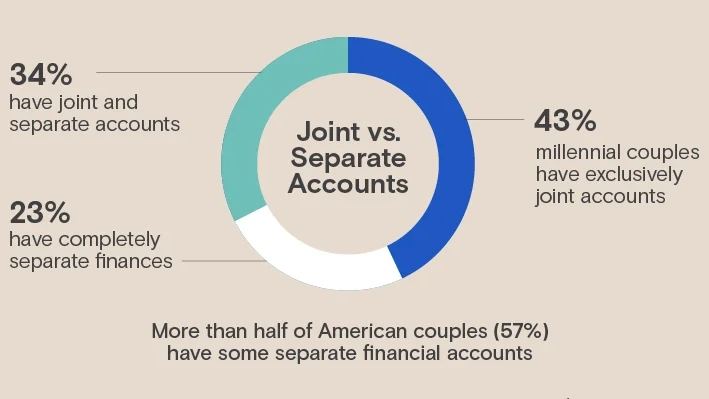
Another couple might choose a joint account for household expenses but retain separate accounts for personal spending.
Neither system is inherently superior. What matters is that both partners understand the arrangement and consent to it.
A larger financial contribution should not give one partner automatic authority over the other’s choices, friendships, career decisions, or daily activities. Likewise, receiving financial help does not mean someone should be expected to surrender all privacy or personal autonomy.
Healthy financial arrangements make responsibilities clear without turning money into a tool for control.
4. Talk About Debt Before You Sign a Lease
Income is only one part of a person’s financial situation.
Two partners earning the same salary may have very different obligations. One might have paid off student loans and own a reliable car. The other might be making substantial loan payments, supporting a family member, or paying off credit card debt.
This does not mean couples need to disclose every private financial detail immediately. However, they should understand enough about each other’s circumstances to create a realistic housing budget.
Useful questions include:
- Do either of us have monthly debt payments that affect affordability?
- How much do we want to save each month?
- Are either of us supporting relatives or paying other recurring obligations?
- How much emergency savings do we want to maintain?
- What happens if one person loses a job or has a temporary income reduction?
These conversations are particularly important for unmarried couples who plan to maintain separate finances.
The goal is not to judge each other’s financial history. It is to avoid making a housing commitment that leaves one or both partners financially vulnerable.
5. Protect Your Individual Savings and Financial Independence
When couples move in together, they often focus on how much money they will save by sharing rent. However, they should also consider whether their new arrangement allows both people to maintain individual financial security.
Each partner should ideally retain some money for personal expenses, emergency savings, and future goals.
This is especially important when one person earns significantly more. If the lower earner spends nearly all their income on housing and shared bills, they may become financially dependent on the relationship even if both people initially intended to maintain independence.
A proportional rent arrangement can help prevent this, but the couple should also discuss savings expectations.
For example, they could agree that each person should be able to contribute a reasonable amount to an emergency fund after paying household expenses. The amount does not need to be identical if incomes differ, but neither partner should be expected to abandon all personal financial goals without a deliberate, mutual decision.
Maintaining savings can also make a relationship healthier because both people have greater flexibility when making career choices or responding to unexpected changes.
6. What Happens If One Partner Loses a Job?
Financial agreements are easy to maintain when both partners receive steady paychecks. They become more complicated when circumstances change.
A job loss, reduction in working hours, illness, or career transition can make a previously affordable rent contribution impossible.
Couples should discuss a temporary hardship plan before they need one.
They might agree to use personal emergency savings, temporarily adjust rent contributions, reduce discretionary spending, or reassess their housing costs. If one partner agrees to cover more rent for a period, they should clarify whether that additional contribution is a gift, a temporary adjustment, or a loan to be repaid.
This distinction matters because unspoken expectations can create future resentment.
For example, the higher earner might assume the lower earner will repay every additional dollar. The lower earner might assume the support was freely given because they are building a shared life together.
Neither assumption should be left unspoken.
Couples should also establish a reasonable review date. A temporary arrangement might be revisited in three months, or sooner if the unemployed partner finds work.
A flexible plan is generally more useful than a rigid rule that cannot adapt to real life.
7. Keep the Lease and Legal Responsibilities in Mind
The financial arrangement between partners does not necessarily change their legal obligations under a rental agreement.
If both people sign the lease, each may have responsibilities under its terms. Depending on the lease and applicable state law, the landlord may be able to pursue either or both tenants for unpaid rent, even if the couple privately agreed to divide the amount differently.
If only one partner signs, the other person’s rights and responsibilities may differ. Couples should review the lease, understand the landlord’s requirements, and avoid assuming that a private agreement overrides the rental contract.
They should also discuss what happens if the relationship ends before the lease expires.
Who can afford to remain in the apartment? How will the security deposit be handled? What happens to shared furniture? Who is responsible for rent during the notice period?
These conversations may feel uncomfortable, but they are part of responsible financial planning. Preparing for a possible change does not mean expecting the relationship to fail.
8. Create a Rent Agreement That Can Evolve
The most useful financial arrangement is one that reflects the couple’s circumstances rather than an abstract rule about what partners should do.
Start by comparing incomes, recurring obligations, and housing preferences. Choose a rent-splitting method, then decide how to handle utilities, groceries, household purchases, and unexpected expenses.
Write down the basics, even if the agreement is informal. A shared spreadsheet or budgeting app can help both people track contributions and see where the household budget stands.
Review the arrangement after a promotion, salary reduction, major expense, or change in housing needs. Even when nothing dramatic happens, checking in every six months can help identify problems before they become arguments.
Most importantly, discuss the arrangement without treating the conversation as a test of love. A partner who asks for proportional rent is not necessarily being selfish, and a partner who prefers a 50/50 split is not automatically being unfair. Their reasoning and willingness to find a workable compromise matter more than the label they choose.
Conclusion: Build a Financial Partnership, Not Just a Shared Household
Whether couples split rent 50/50 or according to income depends on more than salary figures. Housing preferences, debt, savings, financial independence, and each person’s sense of fairness all influence the decision.
A good arrangement allows both partners to contribute meaningfully while preserving room for personal goals and unexpected expenses. It also makes expectations clear when incomes change or the relationship faces difficult circumstances.
Before signing a lease, compare the numbers, discuss the uncomfortable questions, and agree on a plan both people can afford. The objective is not to prove that one formula is universally correct. It is to build a household where money supports the relationship instead of becoming a recurring source of conflict.